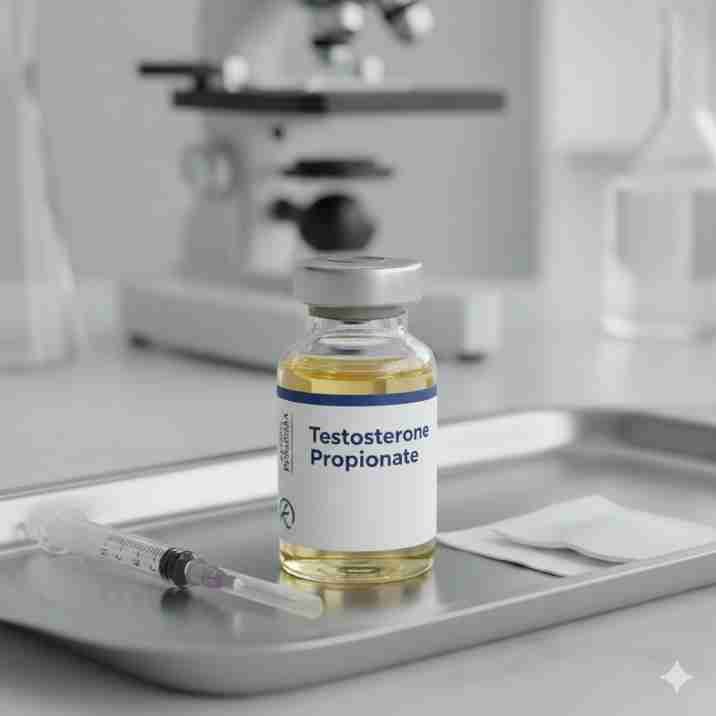
Testosterone cypionate is one of the most commonly prescribed medications for men with low testosterone. It has been used in clinical practice for decades, and for that reason, there is a fairly well-established understanding of how it should be dosed.
Even so, many men starting testosterone replacement therapy are surprised to find that the answer to a simple question, “What is a normal weekly dose?” is not as straightforward as expected.
There is a typical range. There are common starting doses. But there is no single dose that fits every man.
What is Testosterone Cypionate?
Testosterone cypionate is an injectable ester of testosterone designed to release slowly into the bloodstream. Because of its longer half-life, it does not need to be injected daily. Most men use it once or twice per week.
Clinicians favor testosterone cypionate because it is predictable, widely studied, and relatively easy to adjust. When dosed appropriately, it can raise testosterone levels into a normal physiological range without large fluctuations.
Note: The purpose of testosterone cypionate injection is to replace the deficient hormone levels in the body. It is not prescribed to push the body to produce more testosterone than it requires.
What Is a Normal Weekly Dose of Testosterone Cypionate?
In medical practice, a normal weekly dose of testosterone cypionate usually falls between 100 mg and 200 mg per week.
Within that range, most men are prescribed 100 to 150 mg per week, especially when starting therapy.
This dosage range has consistently been shown to bring total testosterone levels into the mid-normal range for adult males when properly monitored.
Doses above this level are sometimes used, but they are not routine and generally require closer follow-up.
Common Weekly Dosage Ranges in TRT
1. 80 to 100 mg per week
This is often used for men with mild deficiency or for those who are sensitive to hormonal changes. It is also a common starting point when providers prefer a conservative approach.
2. 120 to 150 mg per week
This is the most frequently prescribed range in testosterone replacement therapy. It provides symptom relief for many men while maintaining lab values within acceptable limits.
3. 180 to 200 mg per week
This is generally considered the upper end of standard TRT dosing. It may be used in men with very low baseline testosterone levels but requires careful monitoring.
It is worth noting that higher doses do not always lead to better results. In many cases, they simply increase the likelihood of side effects.
Weekly Dosage Overview
| Weekly Dose | Typical Clinical Use |
| 80-100 mg | Mild deficiency or cautious initiation |
| 120-150 mg | Average therapeutic dose |
| 180-200 mg | Uper-range dosing with monitoring |
These doses are intended for medical testosterone replacement, not athletic or cosmetic enhancement.
Also learn about: TRT Twice a Week vs. TRT Once Weekly
Injection Frequency and Dose Splitting
Testosterone cypionate can be injected in different schedules. The total weekly dose is often more important than how it is divided, but injection timing does affect how stable levels remain.
Some men inject once weekly. Others split the dose into two smaller injections each week.
Splitting the dose can reduce hormonal peaks and troughs and may help with symptoms such as mood changes or fatigue near the end of the dosing cycle.
There is no universal rule. Injection frequency is usually adjusted based on symptoms and blood test results rather than preference alone.
Is 200 mg of Testosterone Cypionate Per Week Too High?
A weekly dose of 200 mg is often discussed online, sometimes inaccurately portrayed as either dangerous or ideal.
In reality, 200 mg per week is not automatically excessive, but it is higher than what most men require for replacement purposes.
At this dose, testosterone levels can rise above the normal physiological range in some individuals. When that happens, side effects become more likely.
This is why clinicians typically reserve higher doses for specific cases and rely on blood work to determine whether adjustments are necessary.
Individual Factors That Affect Testosterone Cypionate Dosage
Testosterone dosing is influenced by more than just age or body weight. Several physiological factors play a role:
- Baseline testosterone levels
- Sex hormone–binding globulin (SHBG)
- Body composition
- Estrogen conversion rates
- Symptom severity
Two men on the same dose may have very different blood levels and symptom responses. This variability is one of the main reasons standardized dosing alone is not sufficient.
Signs a Dose May Be Too Low or Too High
When testosterone dosing is not well balanced, symptoms often appear.
A dose that is too low may result in continued fatigue, low libido, poor mood, or minimal improvement from therapy.
A dose that is too high can cause acne, water retention, irritability, elevated hematocrit, or disrupted sleep.
These signs do not always appear immediately, which is why follow-up testing is an essential part of treatment.
The Role of Blood Testing in TRT
Blood testing is not just a formality in testosterone replacement therapy. It is the only reliable way to know how the body is actually responding.
Looking at testosterone levels alone rarely tells the full story. Two men can have the same number on paper and feel completely different. That’s why clinicians usually look at several markers over time, not just a single lab result.
In most cases, total testosterone, free testosterone, estradiol, and hematocrit are checked at regular intervals, especially during the first few months of treatment. These values tend to drift as the body adapts, and dosing often needs small adjustments along the way.
Without this feedback, treatment becomes trial and error. Blood work removes the guesswork and helps keep therapy within a range that is effective without pushing the body too far.
Prescribed Testosterone vs Unsupervised Use
Testosterone that is taken without medical supervision often creates more problems than it solves.
Self-dosing usually means higher-than-needed amounts, irregular injection schedules, and no clear understanding of how estrogen or red blood cell levels are changing. Over time, this can lead to side effects that could have been avoided with basic monitoring.
Medically supervised TRT is different. The focus is not on maximizing numbers, but on maintaining balance. The aim is to improve symptoms while keeping the body’s systems working normally over the long term.
What Dose of testosterone Cypionate Is Safest Long Term?
There isn’t a single dose of testosterone cypionate that can be called “safest” for everyone.
In practice, the safest dose is usually the lowest one that consistently improves symptoms while keeping blood values in range. For many men, that ends up being somewhere around 100 to 150 mg per week.
Some do well on less. A smaller number needs more. What matters is not the dose itself, but how the body responds to it over time. When dosing is guided by symptoms and supported by regular lab work, long-term TRT is generally well tolerated.
Final Thoughts
Testosterone cypionate has a long track record of effective use in testosterone replacement therapy. While typical weekly doses are well understood, individual response varies.
A normal dose is not defined by what works for someone else. It is defined by how your body responds over time, as measured by symptoms and objective lab results.
For that reason, testosterone therapy should always be approached as a monitored medical treatment rather than a fixed protocol.