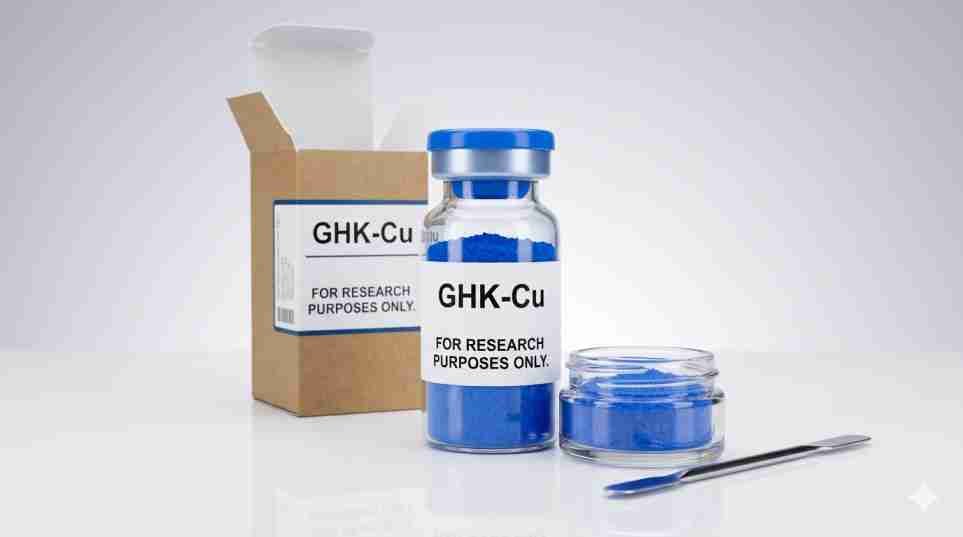
GHK-Cu develops when the GHK peptide is bound to copper ions in the blood plasma. It was identified in human plasma by researchers in the 1970s. It becomes less concentrated with age; thus, it may reduce the quality of the skin and tissues.
Research studies indicate that GHK- Cu has the potential to play a vital role in skin repair, tissue regeneration, and cell communication, and transmits signals that enhance collagen and elastin synthesis in skin cells. These motions maintain the skin firm, smooth, and resilient. GHK-Cu has also been studied in research settings for its antioxidant activity and has been shown to reduce inflammation.
Numerous studies indicate that the peptide contributes to wound healing and the maintenance of healthy blood vessels in animal studies. Researchers have noted the benefits of hair follicle support and scalp skin health, which is why GHK-Cu is used in peptide therapy and luxury skincare.
NIH research shows that GHK -Cu stimulates tissue repair-linked gene expression and enhances cellular balance and skin structure. These results continue to make GHK-Cu the leader in the field of anti-aging and regenerative peptides.
Note: GHK-Cu is not approved by the FDA for human consumption and is currently available only for research studies.
Want to Start Your Peptide Therapy? Apply Now!
How GHK-Cu Works: What Do the Research Studies Show?
Research suggests that GHK-Cu is a signal that instructs cells to heal and replace injured tissues. The copper peptide binds to receptors on the surfaces of skin cells and other tissues and induces increased collagen and elastin synthesis, thereby strengthening the skin. The collagen is firm, and the elastin is flexible and smooth.
GHK-Cu also supports healthy skin renewal by stimulating the activity of cells involved in tissue repair. It promotes the natural regeneration process, in which older skin cells are gradually replaced by newer, more functional cells. Research suggests that GHK-Cu can influence the expression of genes related to tissue repair and inflammation control, which may contribute to faster healing and improved overall skin appearance.
The peptide is also involved in antioxidant defense, as reported in the study. Copper ions neutralize free radicals that harm skin cells, thereby reducing oxidative stress and delaying visible signs of aging. Reduced stress increases skin tone and texture. Moreover, GHK-Cu promotes the formation of new blood vessels in injured tissues.
Increased circulation supplies oxygen and nutrients to the skin and the hair follicles, thereby aiding in repairing wounds and maintaining the health of the scalp. The biological advantages of GHK-Cu are supported by NIH studies that found that GHK-Cu improved tissue remodeling and reduced markers of inflammation, findings that are important in the study of peptide therapy.
GHK-Cu Benefits (Backed by Research)
GHK-Cu has several established advantages, as confirmed by laboratory and clinical research.
Its advantages include skin repair, tissue health, and cellular balance. This copper peptide has been studied by researchers for a long period in medical and cosmetic applications. These are the main advantages that are outlined in a simplified way below.
1. Supports Collagen and Elastin Production
GHK- Cu has the potential to increases collagen and elastin levels in skin cells, which improves the skin structure and raises its elasticity. Lack of collagen and elastin results in wrinkles and Accentuated Sagging. A study at the NIH found that GHK-Cu increased collagen synthesis markers, and researchers reported increased skin firmness and elasticity.
2. Improves Skin Repair and Wound Healing
GHK-Cu is a skin injury stem repair accelerator that signals the regenerative cells and helps the wound to heal. This accelerates recovery and minimizes scarring. A study at PubMed Central has reported better tissue remodeling, and the peptide also enhances the organization of repaired layers on the skin.
3. Reduces Inflammation in Skin and Tissues
GHK-Cu also regulates the inflammatory response, which may destroy skin cells and slow healing. Copper peptides regulate the pathways of inflammation. NIH research demonstrates that GHK-Cu reduces pro-inflammatory markers, thereby enhancing skin calmness and tissue homeostasis.
4. Provides Antioxidant Protection
GHK- Cu improves the antioxidant activity in skin cells, which prevents the damage of free radicals, which causes aging. Copper peptides assist in neutralizing the oxidative stress of enzymes. Reduced oxidative stress leads to better skin color and skin health in the long term.
5. Supports Hair Follicle Health
GHK -Cu enhances the skin condition of the scalp and blood circulation to make sure the nutrients reach the hair follicles. A healthier environment favors thicker and stronger hair. GHK -Cu is associated with the stimulation of hair-follicle cells in lab studies, and certain studies indicate decreased follicular inflammation.
Note: All these benefits are limited to either research studies or animal studies, and human consumption is not approved by the FDA for GHK-Cu
Start Your Peptide Therapy Now
In laboratory research, GHK-Cu (Glycyl-L-histidyl-L-lysine copper) is often supplied as a 50 mg lyophilized vial. It can be used as a stock material for different cellular or biochemical studies. Research shows that this copper peptide works best at low and stable concentrations. Very high concentrations may cause cellular stress in experimental models and do not necessarily produce stronger results.
50 mg GHK-Cu Dosage Guide: In Research Environment
1. Standard Quantitative Range
Biochemical data indicate that GHK-Cu functions effectively at micro-molar concentrations. To maintain homeostatic stability within a test subject or medium, the following benchmarks are standard:
- Standard Weekly Concentration: 1 mg to 2 mg total per 7-day cycle.
- Frequency: Divided into multiple micro-administrations to ensure stable plasma or tissue levels.
- Objective: Maintaining tissue integrity and preventing excessive copper accumulation (hypercupremia) in the test model.
2. Initial Calibration (Baseline Phase)
To establish a baseline and monitor for adverse specimen reactions or localized sensitivity, researchers typically initiate the protocol at the lower end of the spectrum.
- Daily Aliquot: 0.1 mg to 0.2 mg.
- Weekly Cumulative Total: 0.5 mg to 1.0 mg.
- Rationale: This conservative approach allows for the observation of steady-state transitions and minimizes oxidative stress variables.
3. Maintenance and Longitudinal Observation
Once the baseline phase is complete, a maintenance schedule is established to observe long-term tissue responses.
- Maintenance Target: 1 mg per week.
- Distribution: Split into 2 or 3 separate applications.
- Rationale: Prioritizes the preservation of cellular signaling pathways and tissue balance over rapid-response variables.
How to Prepare GHK-Cu for Injection
Prolonged stability and minimized risk of contamination. Properly prepared contains GHK 2 -GU. Practically, there should be sterile handling before every peptide injection. In this section, the standard procedure of preparation adopted in peptide protocols is explained.
Supplies Needed Before Mixing
Ensure that supplies are not opened.
- GHK‑Cu 50 mg peptide vial
- Bacteriostatic water
- Alcohol swabs
- Insulin syringe
- Clean and sanitized surface
- Bacterial growth is inhibited by using bacteriostatic water following mixing.
Step-by-Step Reconstitution Process
1. Wipe the tops of the vials using alcohol swabs.
2. Add bacteriostatic water into the syringe.
3. Add water gradually to the side wall of the peptide vial.
4. The peptide should dissolve.
5. Swirl the vial gently until the solution is noticed to be clear.
6. The vial should not be shaken violently; this will destroy the structure of the peptide.
Expected Timeline and Results Of GHK-Cu
Data acquisition in GHK-Cu studies typically reveals a progressive response curve. Biological markers often shift before macro-level structural changes become measurable. The rate of response is contingent upon the concentration, frequency of application, and the baseline condition of the test model.
Phase 1: Initial Response (Interval: 1–14 Days)
Early-stage observations are primarily biochemical rather than structural.
- Cellular Hydration: Initial stabilization of the extracellular matrix (ECM) often results in increased fluid retention within the tissue layers.
- Inflammatory Modulation: A measurable reduction in localized inflammatory markers (cytokines) may be observed.
- Early Repair Signaling: In vitro assays typically show the beginning of gene expression modulation related to antioxidant enzymes (e.g., superoxide dismutase).
Phase 2: Structural Integration (Interval: 3–6 Weeks)
During this window, the research model typically exhibits transitions in tissue density and elasticity.
- Extracellular Matrix (ECM) Synthesis: Quantitative increases in Type I collagen and glycosaminoglycans are typically documented.
- Surface Refinement: High-resolution imaging may show a reduction in topographical irregularities of the tissue surface.
- Accelerated Proliferation: Enhanced keratinocyte and fibroblast proliferation rates contribute to improved wound-healing metrics.
Phase 3: Maturation and Optimization (Interval: 8–12 Weeks)
Longer-term data sets generally show the peak efficacy of the current concentration protocol.
- Tensile Strength: Significant improvements in tissue “toughness” and structural resilience are recorded via biomechanical testing.
- Pigmentation Homeostasis: Stabilization of melanocyte activity often leads to more uniform pigmentation across the specimen.
- Follicular Analysis: In specific models, data may indicate an increase in follicular size and hair shaft diameter due to improved perifollicular vascularization.
Phase 4: Longitudinal Maintenance and Stability
Extended observation confirms that GHK-Cu functions through steady-state modulation rather than acute intervention.
- Sustained Remodeling: Continuous application supports the ongoing cycle of collagen synthesis and breakdown (remodeling).
- Cessation Effects: Withdrawal of the peptide complex from the research environment typically results in a gradual regression of the observed markers toward baseline values as the model returns to its previous metabolic state.
Referenced Studies: